Living MATTERS
What if, instead of building homes, we grew them?
We are LIVING MATTERS, and we have redefined construction by working with nature to build housing that’s scalable, accessible, and low-emission. LIVING MATTERS uses proven building strategies alongside innovative biomaterials to integrate our building processes with the local ecology.
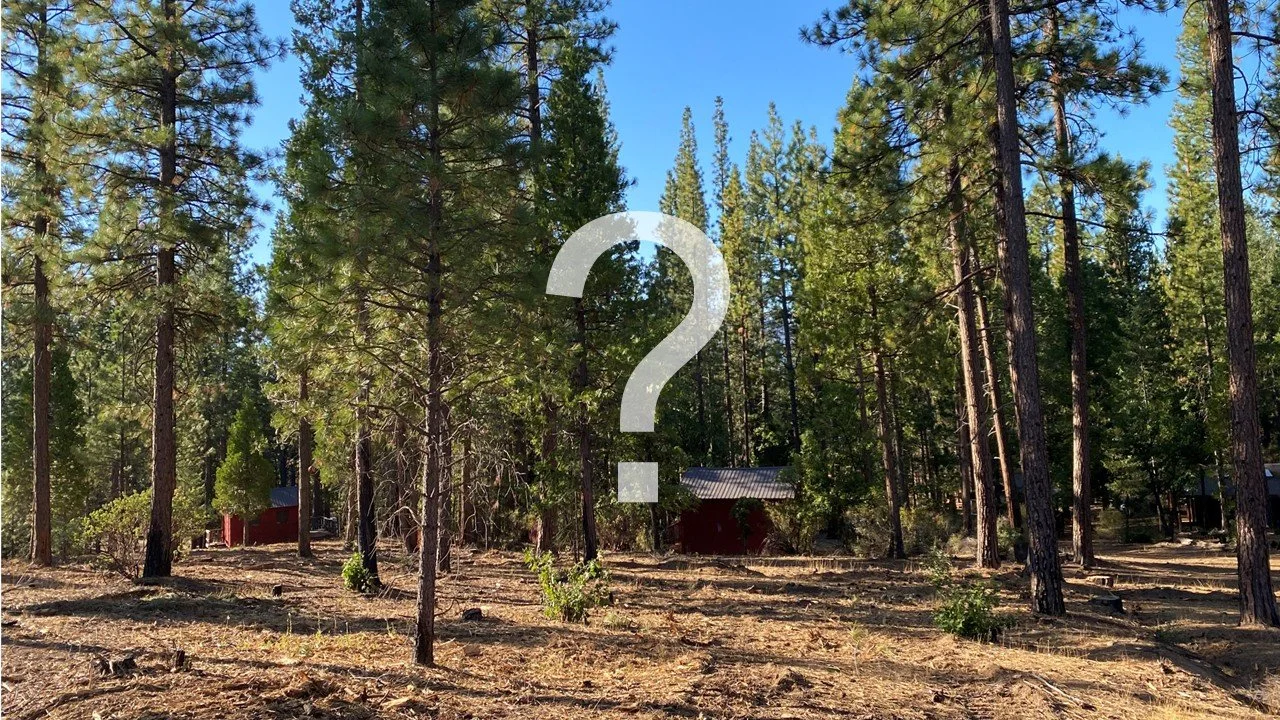
How do you grow a house from the earth?
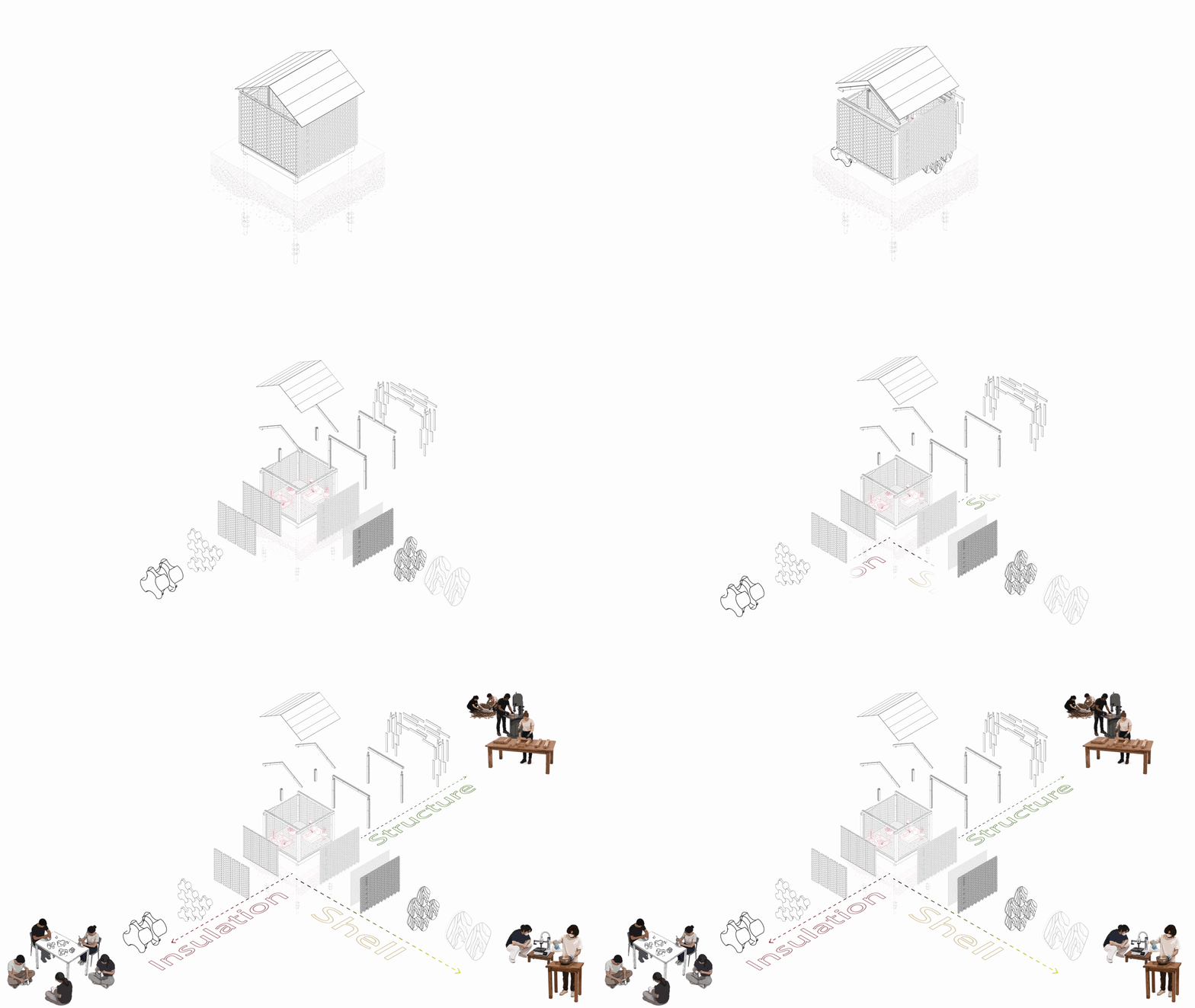
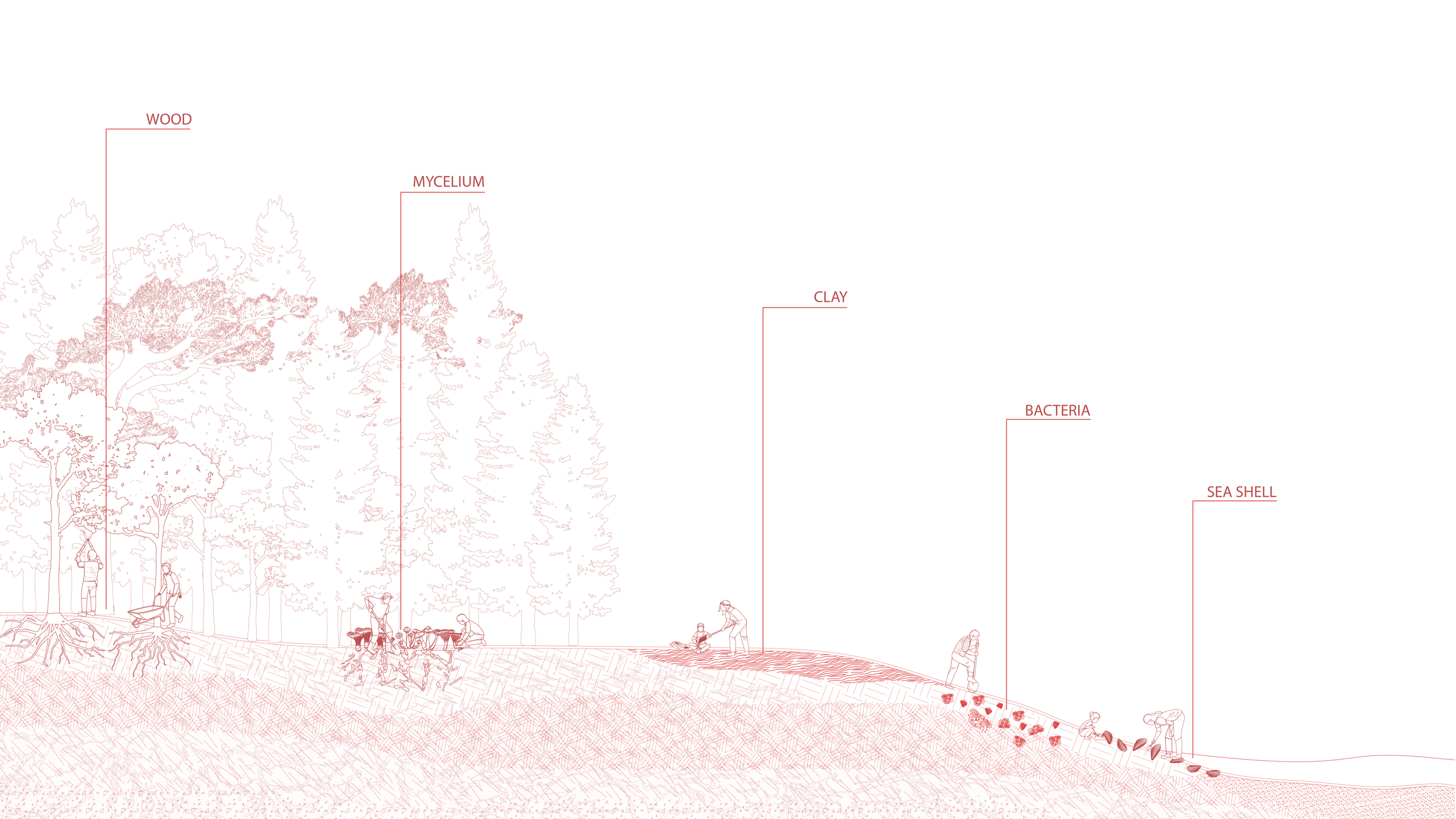
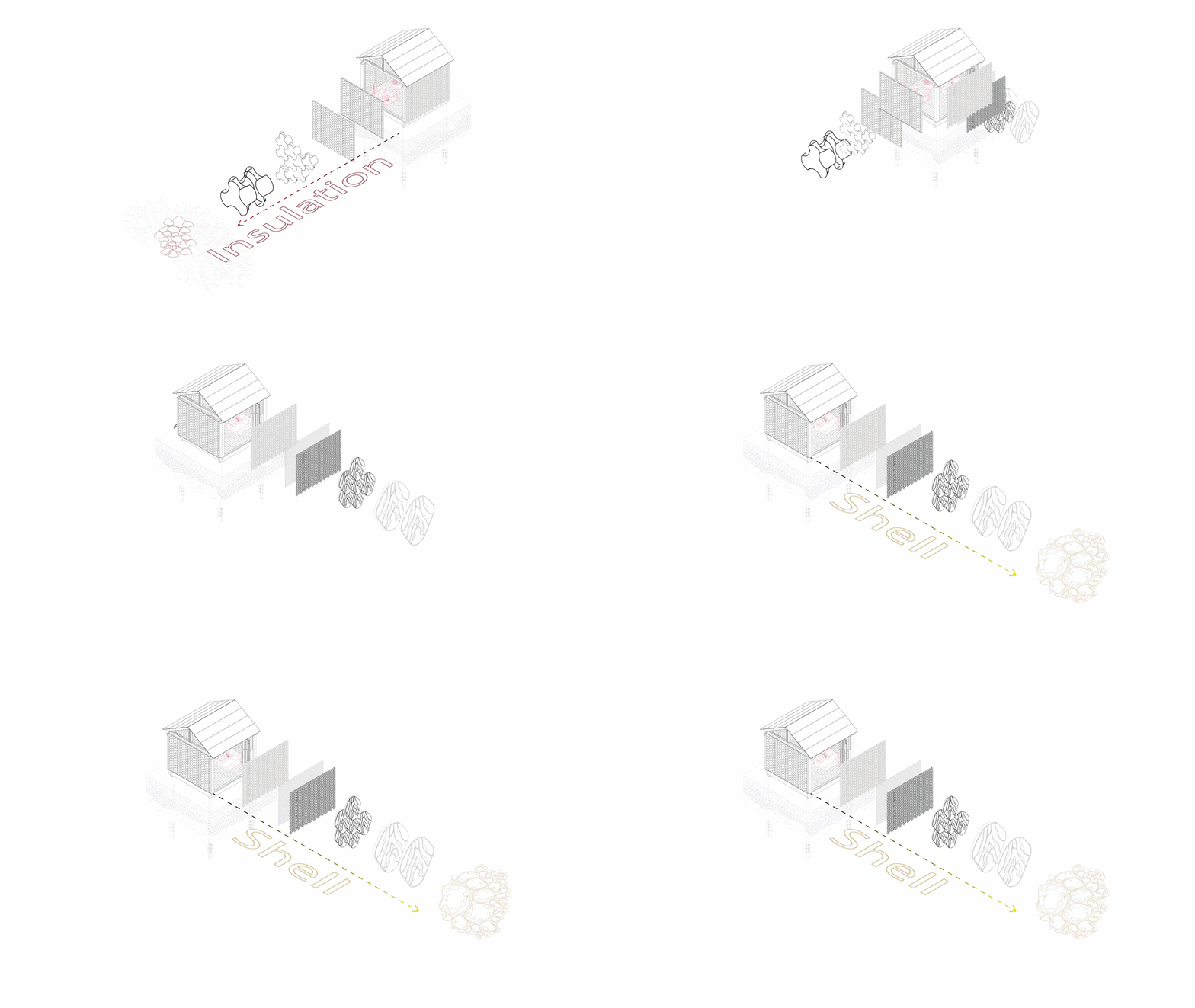
LIVING MATTERS provides the blueprint for the future of sustainable building: a home you grow can’t be shipped in from somewhere else; it has to be built by the people who live there, from what the land already provides. To build a home with natural materials, we’ve combined biomaterials with proven fabrication methods. We are combining three materials: leftover cut-off lumber for the structural frame; mycelium blocks for insulation; and a mixture of clay, shells and bacteria for the external shell.
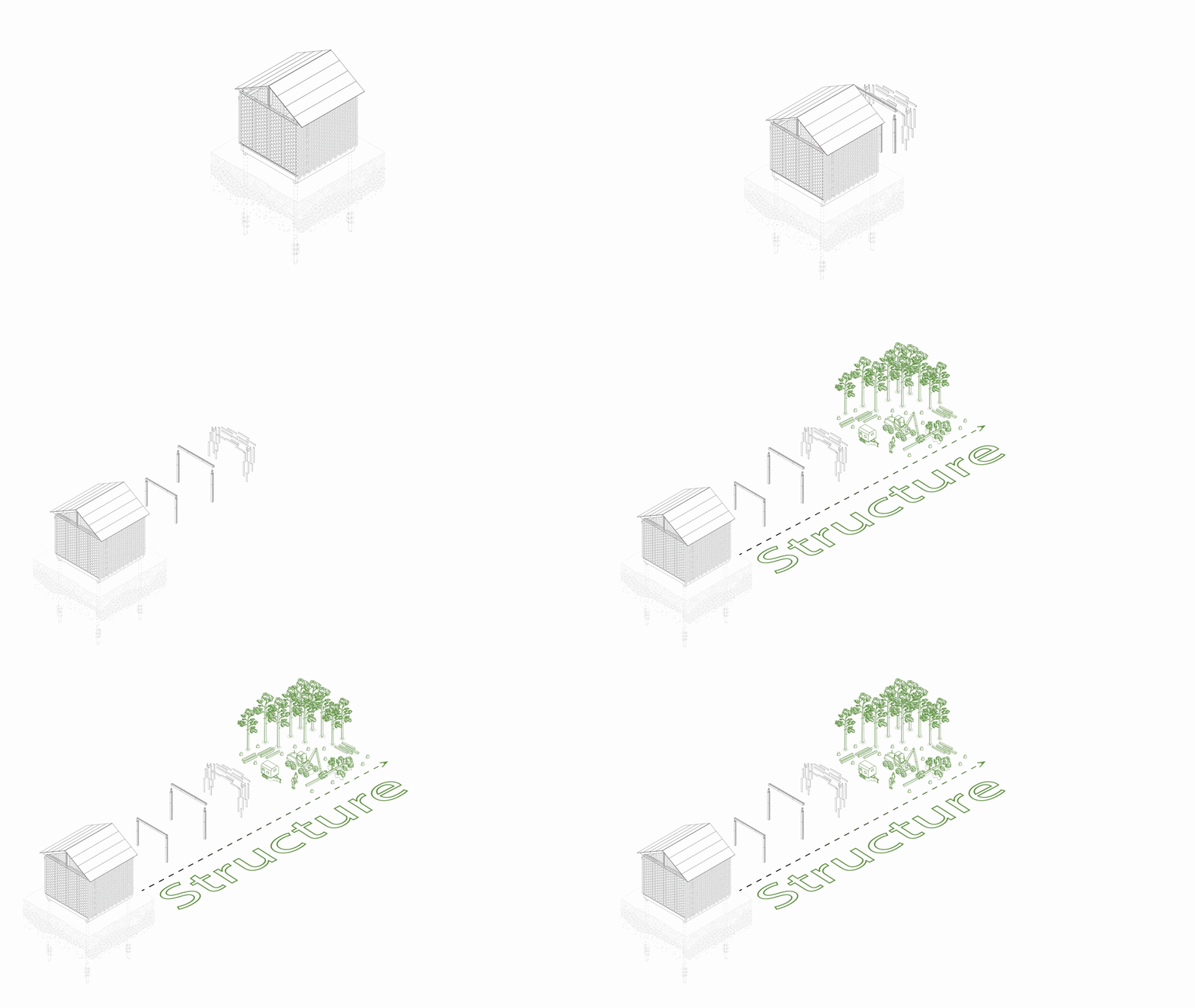
The Frame
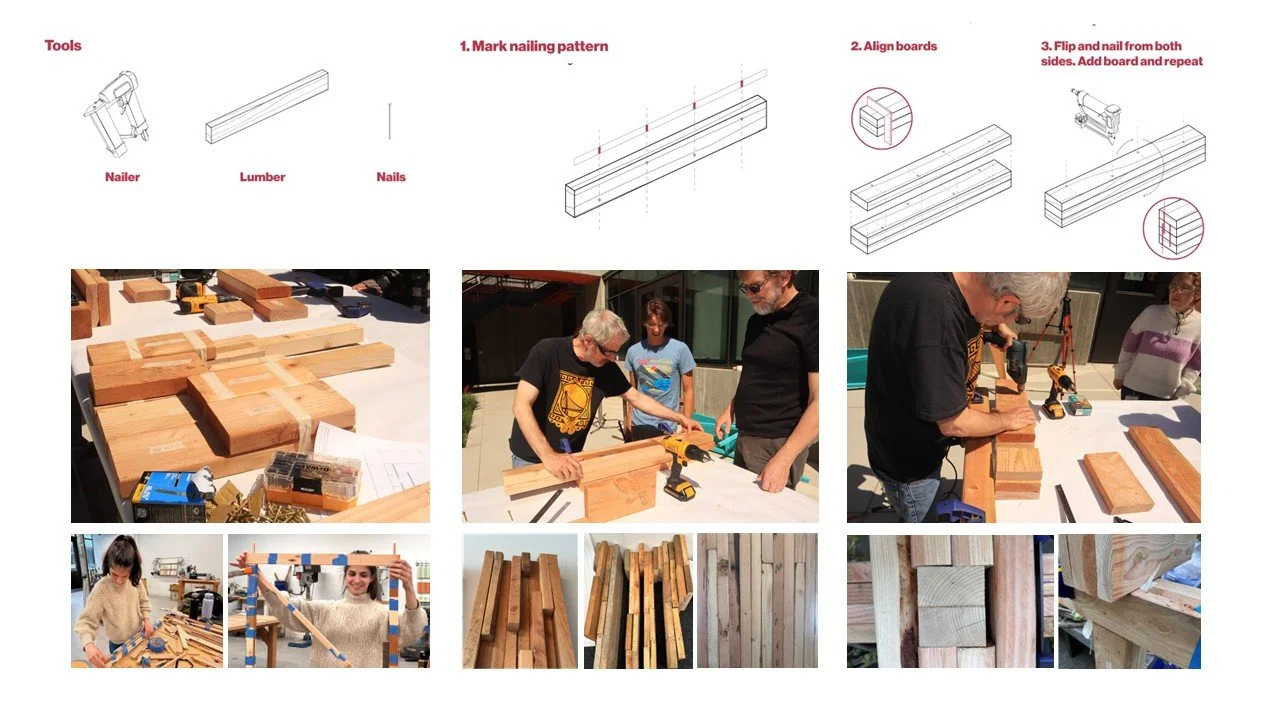
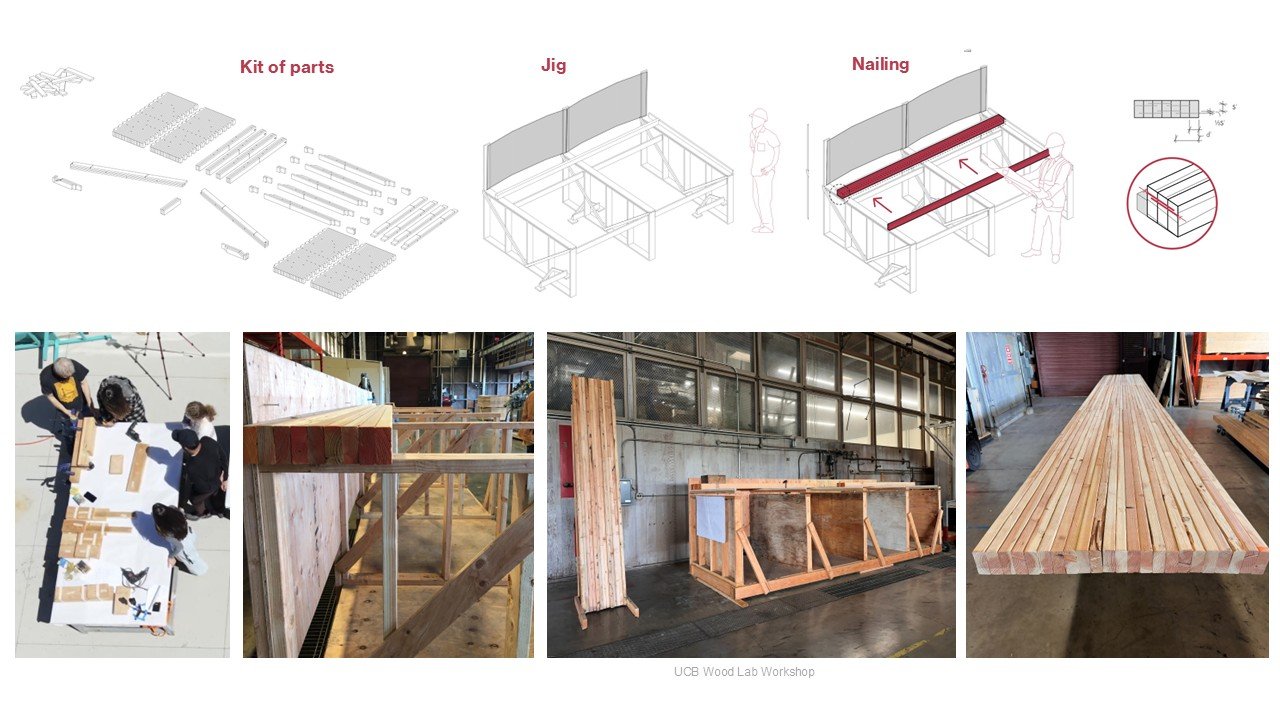
In California, 75% of all wood framing comes from out of state. In construction nearly 20% of this high-grade lumber is cut-off — perfectly sized and graded. We sourced these cut-offs directly from construction sites who gladly give it away to avoid a trip to the landfill. We also source wood from small trees that need to be removed from the forest to help clear it for forest maintenance Unlike composite lumber, we make the structural frame with no toxic adhesives into a low-tech mass timber post-and-beam system, code compliant, field-assembled with mechanical fasteners. The construction process relies on a small set of accessible tools and materials, like a pneumatic nail gun, construction grade nails, kiln dried structurally graded lumber. The system is designed to be prefabricated in local woodshops, allowing for faster construction timelines while minimizing waste generated on-site. By relying on simple assembly methods with locally available resources, the proposal reduces the need for highly industrialized manufacturing processes and expensive transportation costs.
Grown Insulation
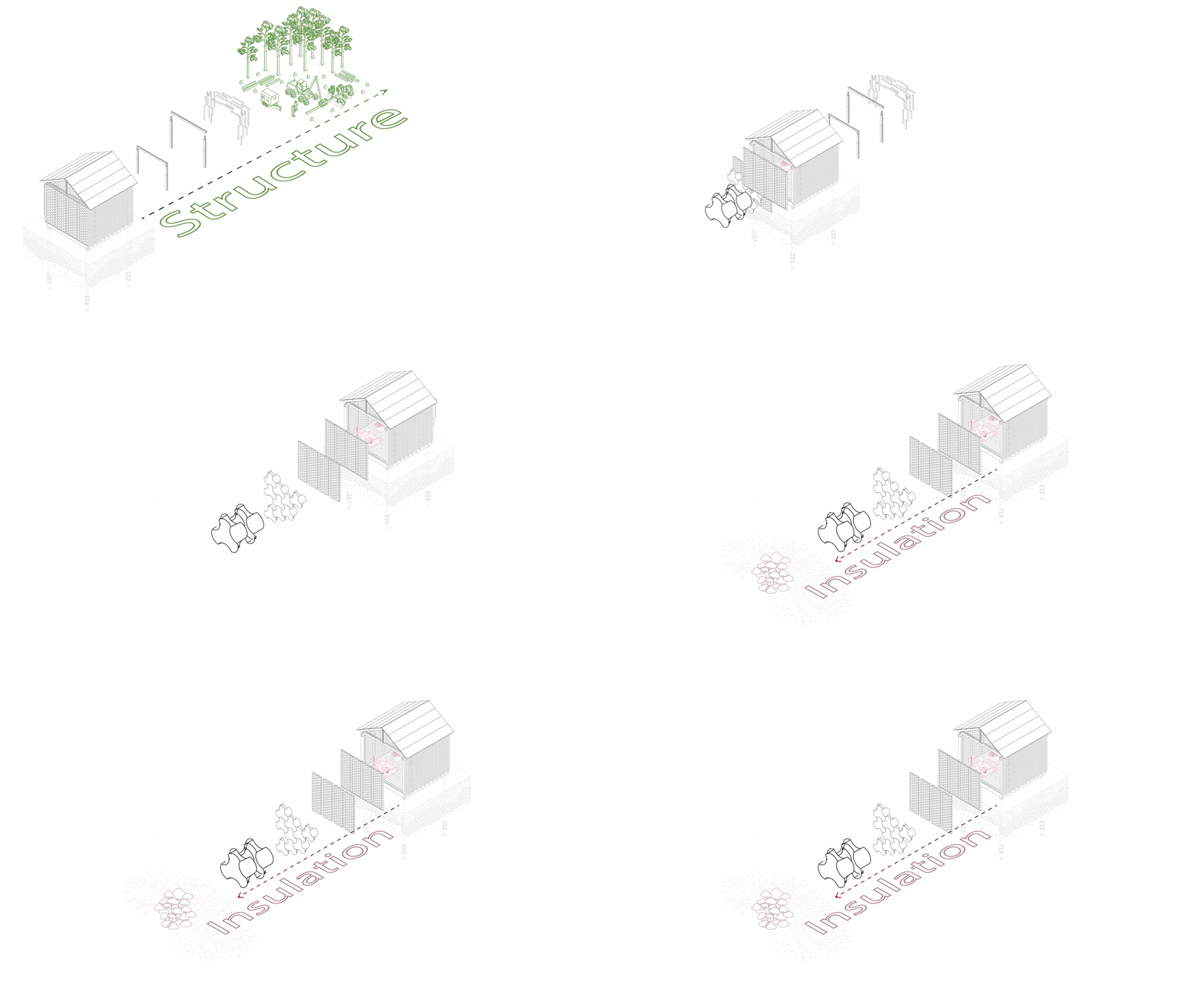
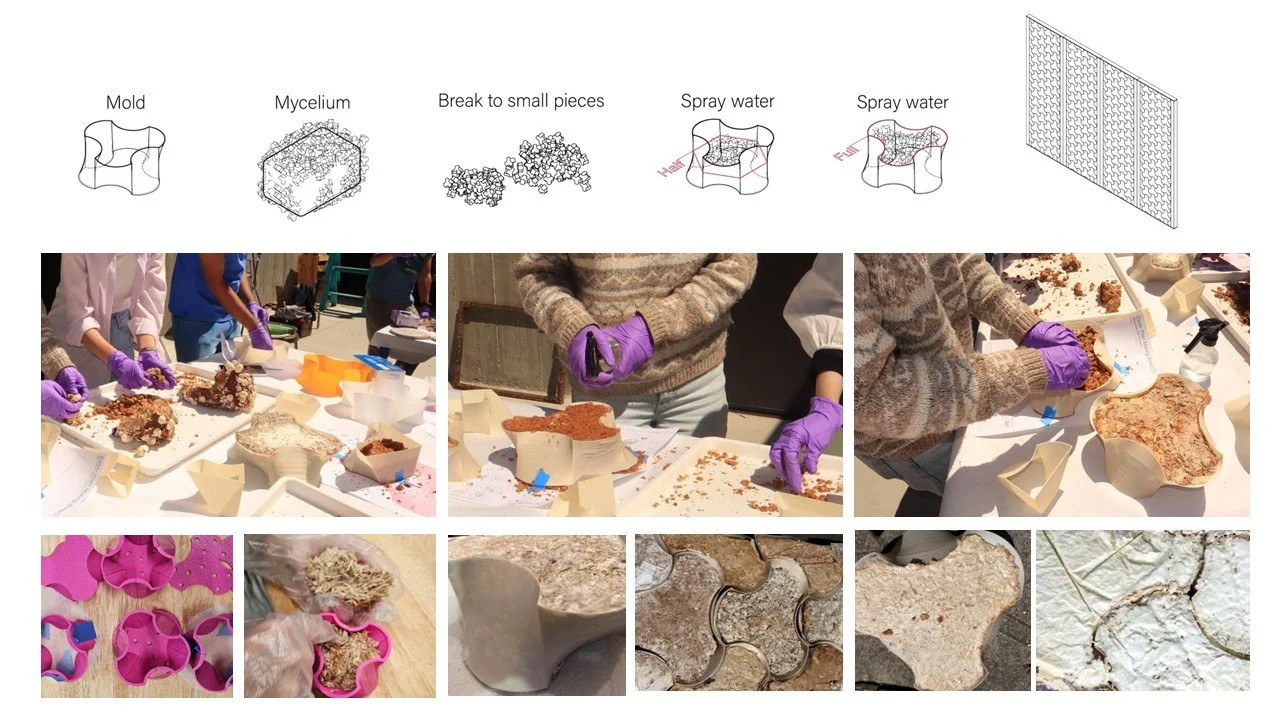
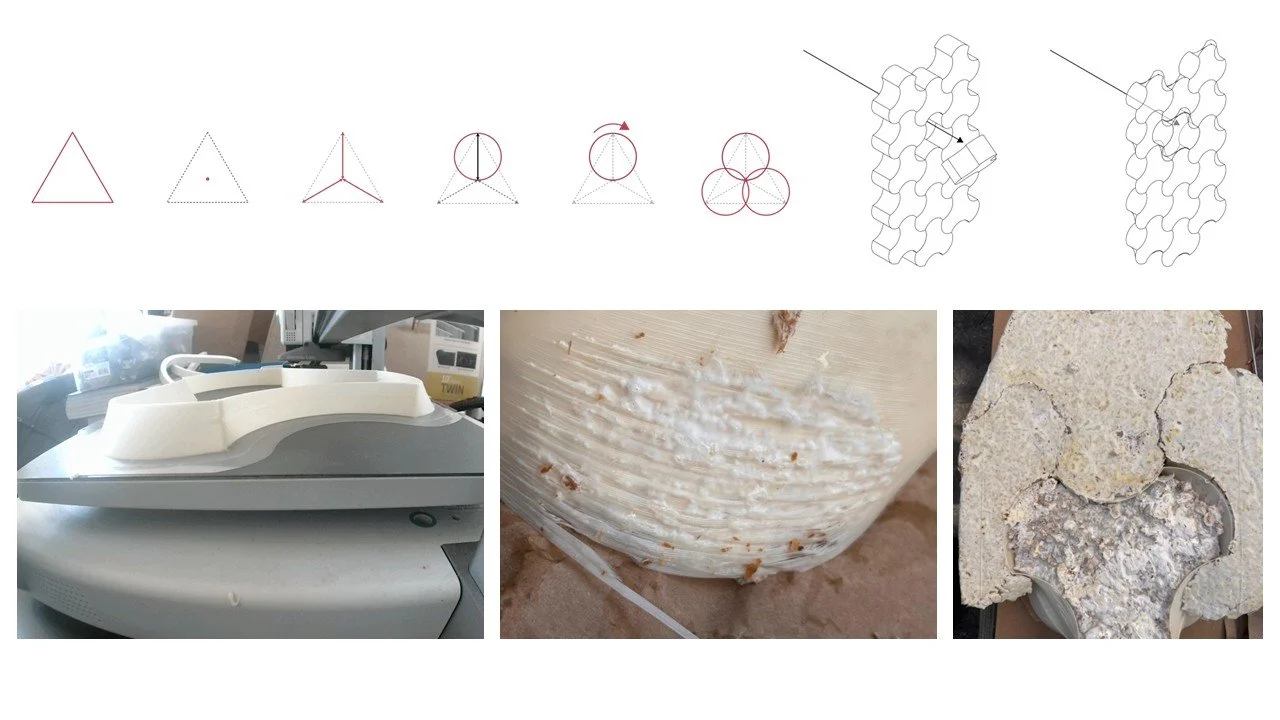
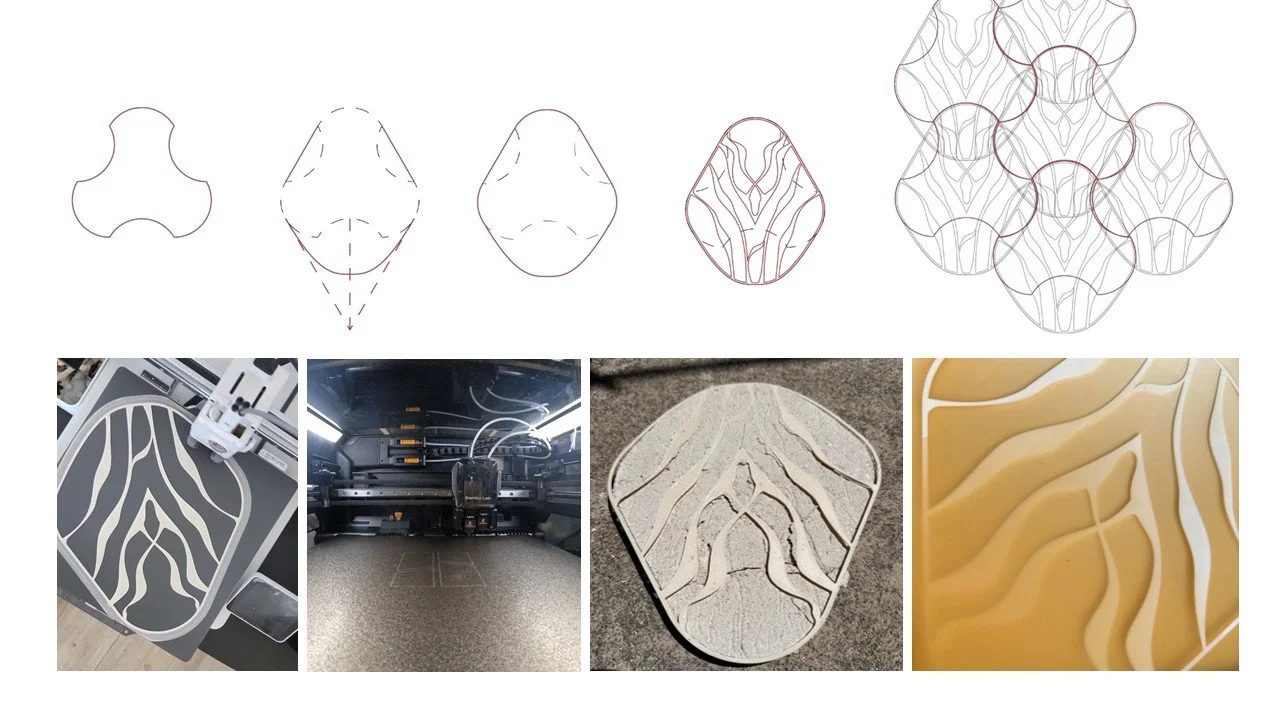
Mycelium, cultivated on agricultural byproducts, has a thermal performance comparable to fiberglass. As it grows, it binds that agricultural waste into a solid block - and at the end of its life, it composts back into the soil. Conventional insulation relies on toxic materials such as fiberglass and petroleum-based foams that off-gas harmful VOCs. Mycelium offers a sustainable alternative: non-toxic, naturally fire resistant, and grown from material that would otherwise be thrown away. Instead of cultivating mycelium in large sections, we 3D print molds using the biodegradable filament PHA, a bioplastic produced by bacteria. These tiles enable us to realize the full potential of mycelium insulation while allowing for flexibility in making structures of different shapes and sizes. Especially exciting about this workflow is that we have a living building block with profound plasticity: the shapes of the tiles, the type of mycelium - they can be easily modified. For example, while growing mycelium we discovered its ability to breakdown the PHA and make connections between blocks - like a natural welding. The system is modular and scalable - blocks can be grown on-site or prefabricated off-site - and because the process is so adaptable, communities can experiment with their own local sources. It’s also an opportunity for improving or customizing: the 3D printers we use are quickly becoming accessible in price and useability, opening the process up to creativity.
Bio-Clay Tile Shell
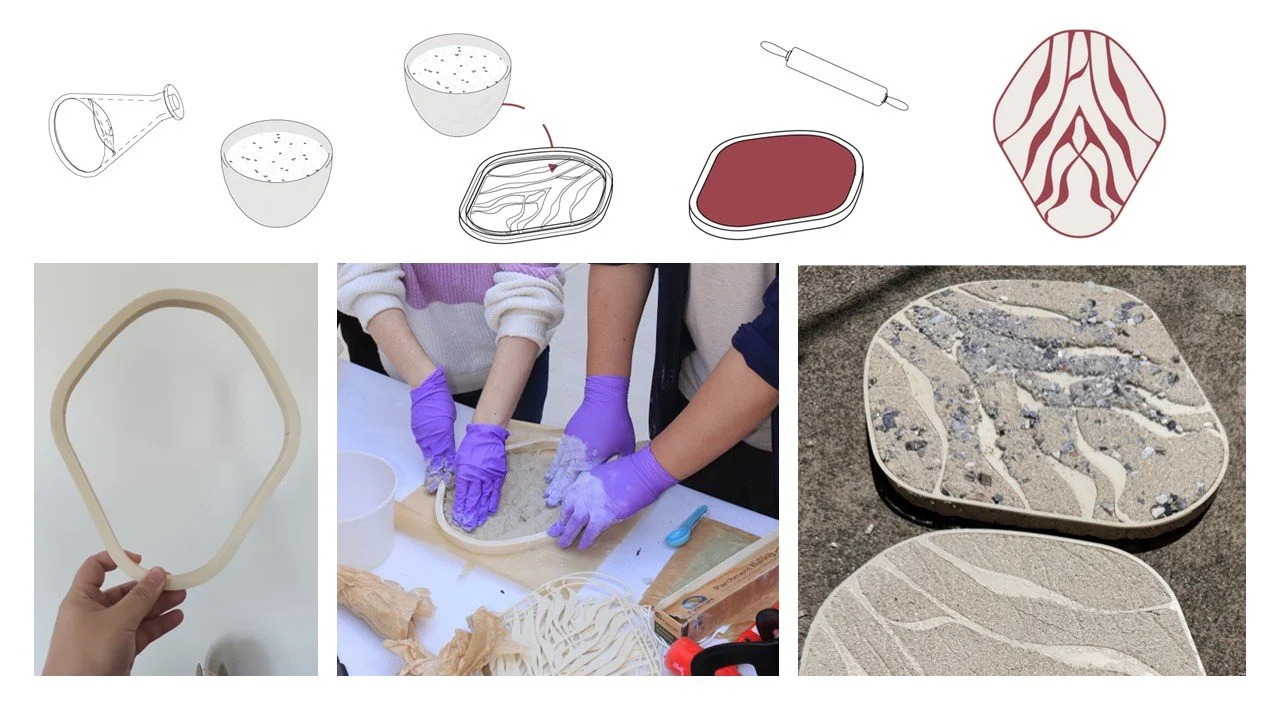
Finally, the shell. To protect the home from weather, UV light, moisture, and fire, we looked to traditional earthen tile systems. Like traditional clay roofing, our tiles hang from simple battens. However, instead of relying on the traditional industrial processes for making these tiles, we harden them with bacteria. We mix our clay with a special bacteria called Sporosarcina pasteurii - a safe, naturally occurring microbe.
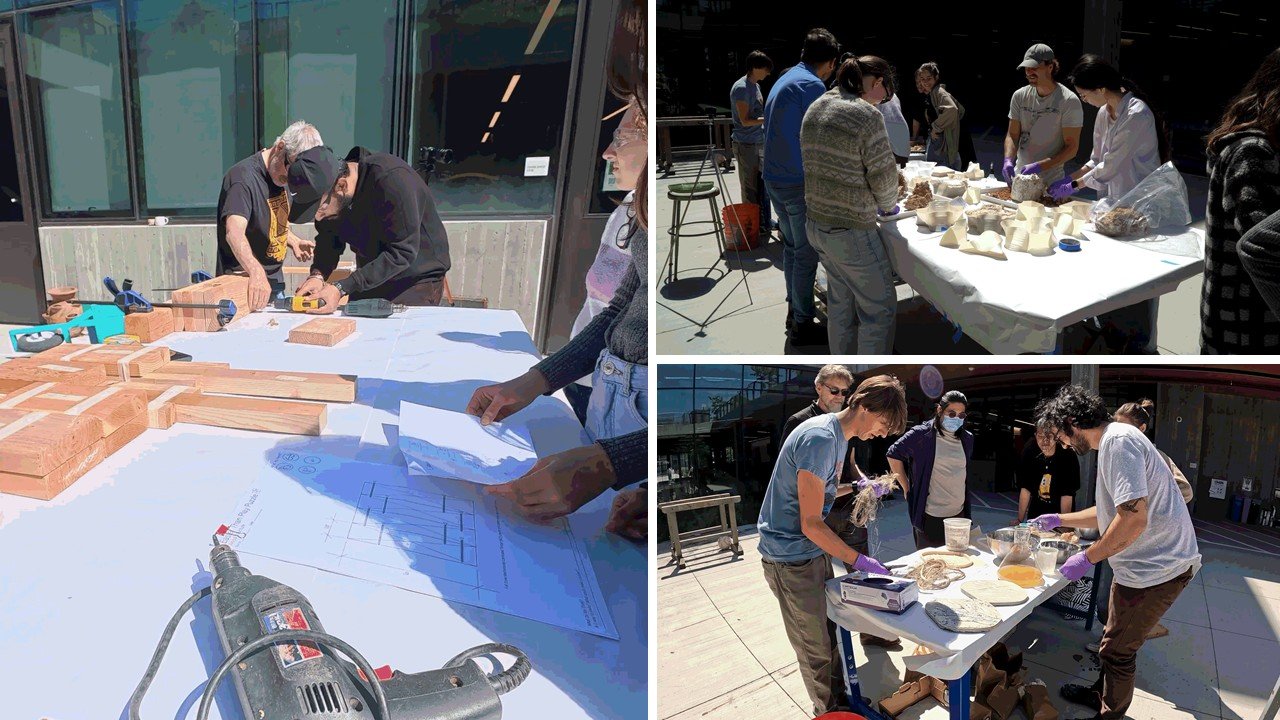
Community Workshops
We hosted a collaborative workshop where UCSF and CCA students constructed full-scale elements with their own hands, proof that this system can be taught, shared, and assembled by a community, not just a single contractor.
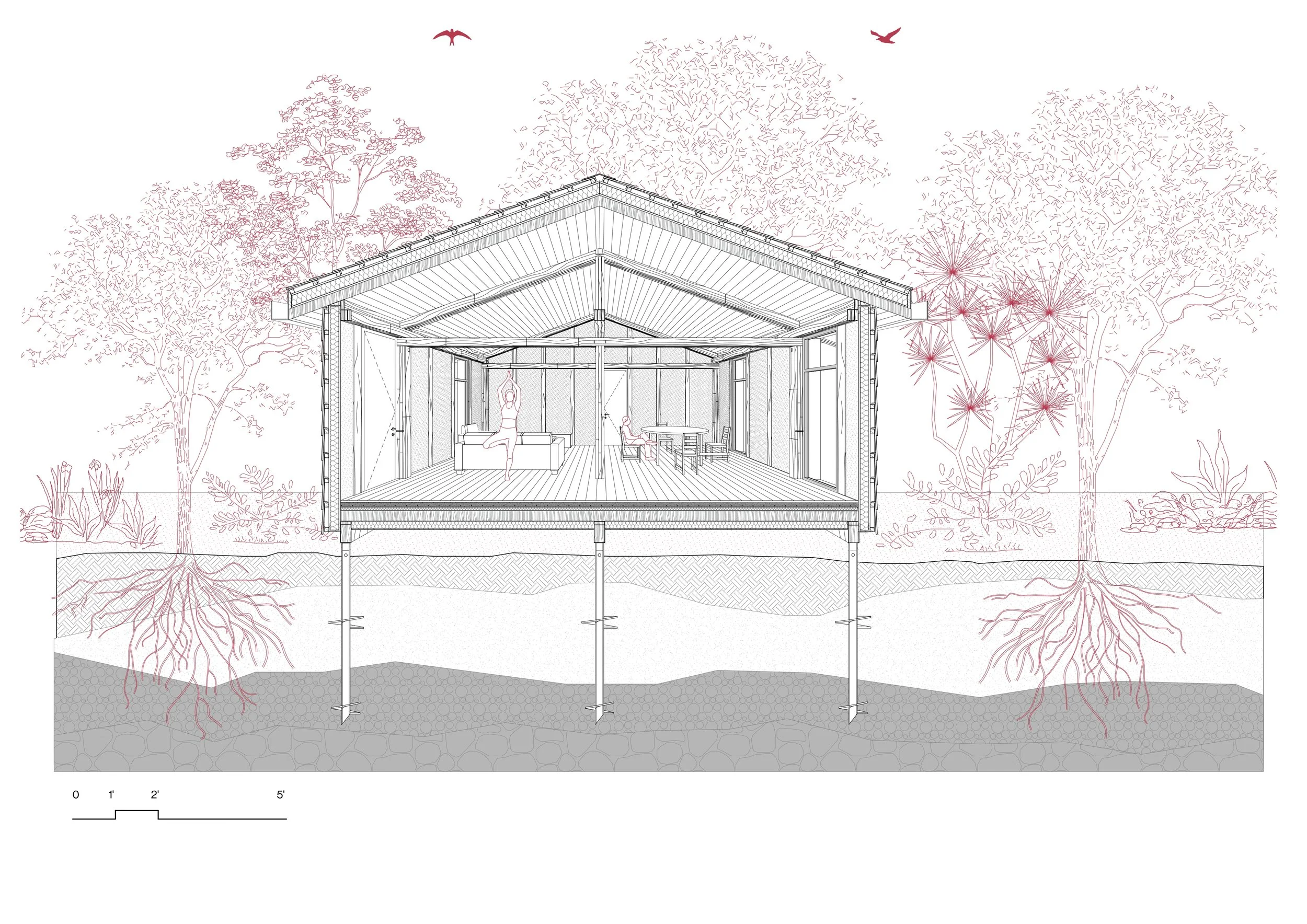
The Design
We haven’t just improved upon the materials we use to build - the full power of Living Matters is the synthesis of biomaterials into a novel architectural design. Our elevated hydraulic steel pile system eliminates concrete foundations and preserves the site's ecology. Beyond simple assembly, we also designed the house for easy deconstruction so its materials could be reclaimed or naturally composted back into the earth.
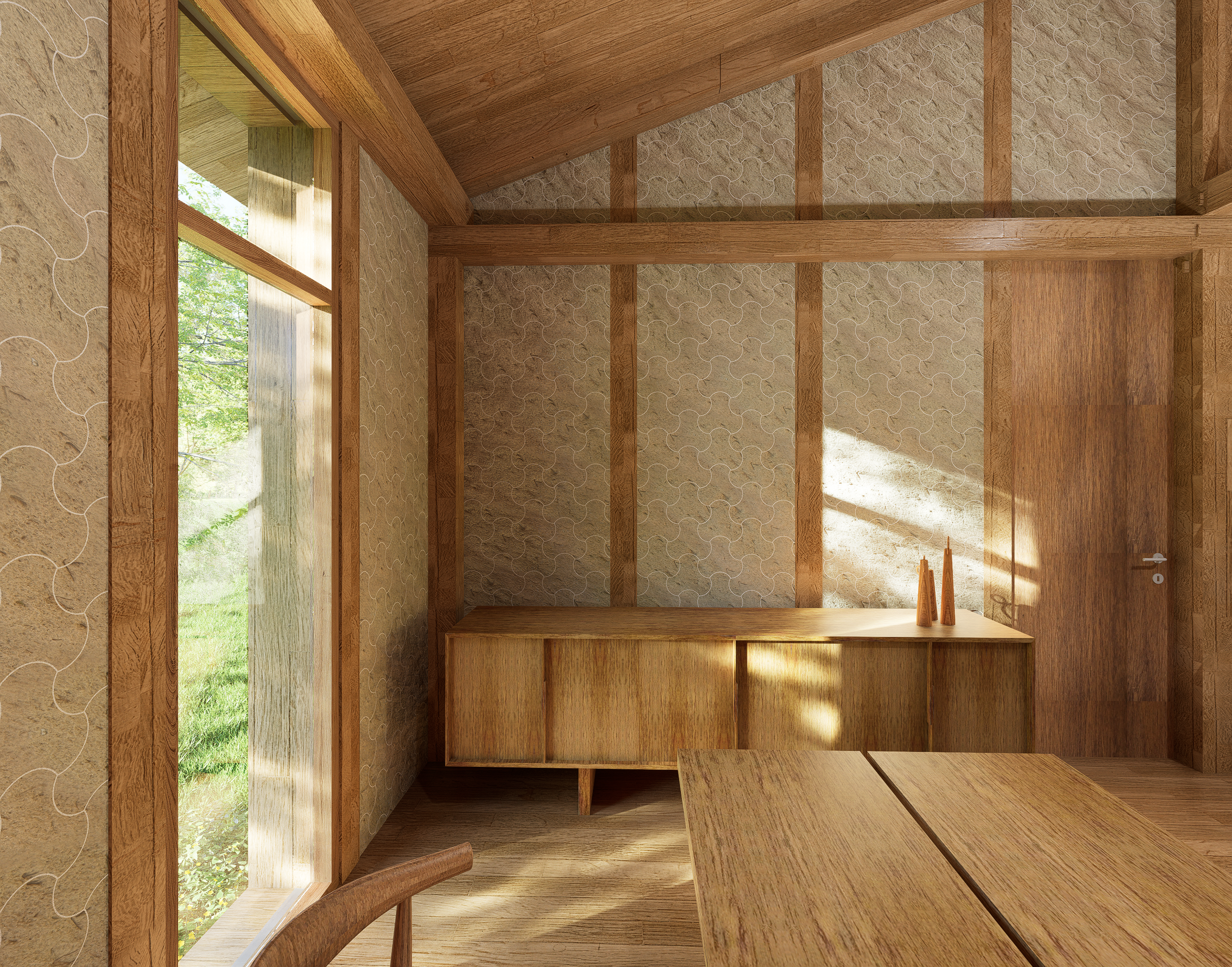
The mycelium can be left exposed and simply sealed, or apply an earthen plaster. Growing parts from living materials avoids toxic binders, glues, and paints for a healthier interior space.
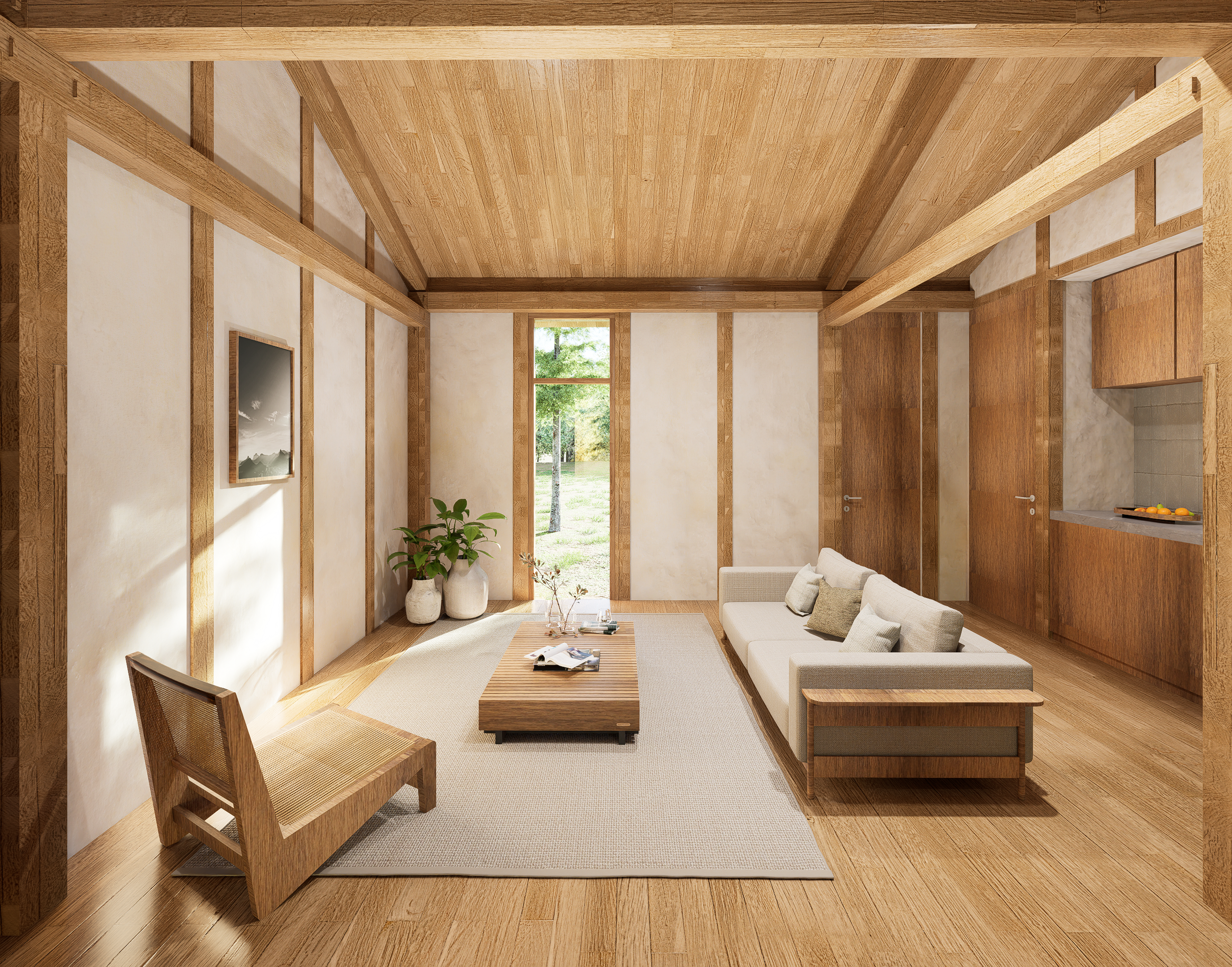
Our framework is community-led by design: it runs on regional supply chains, local skilled labor, and the knowledge of the farmers and makers who already understand their ecology. Every building becomes a chance to share skills and build local capacity - turning the labor problem into a community opportunity.
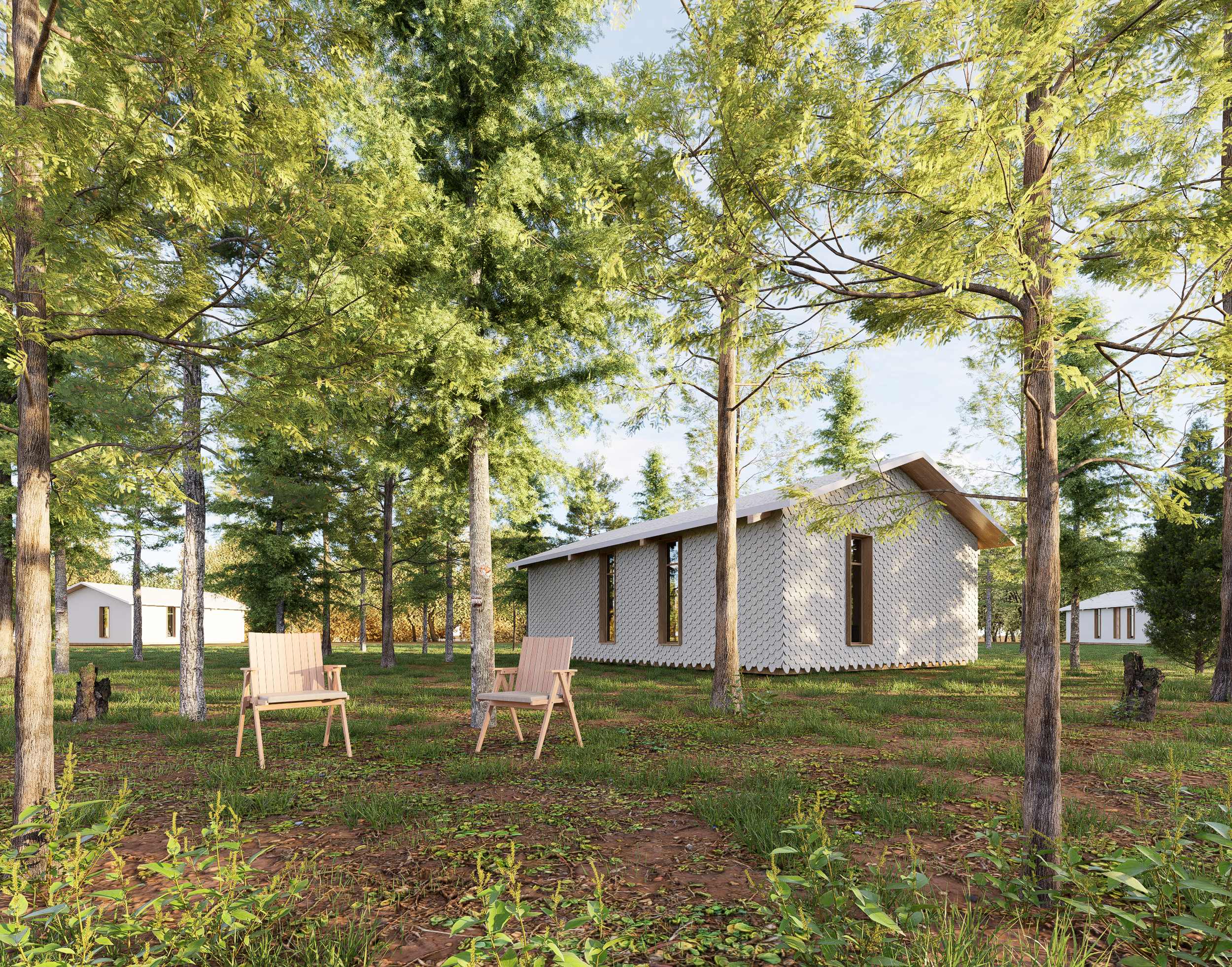
LIVING MATTERS is built on the principle that to build sustainably, you must understand your ecology, build from it, with the people who live there. This isn't Californian. It's universal.
Project Video